How therapists win with Google Ads
Sixty minutes, three secrets, and the calculator we use before a single dollar of ad spend. Go beyond directory listings: build a direct path from Google search to your practice, with a budget grounded in your own numbers.
Thirty minutes of the three secrets, with real numbers from therapy practices. Then thirty minutes live: your questions, and a demonstration where we run a practice through the whole thing in front of you.
Sign the attendee agreement the join link and pre work land in your inbox the calculator opens in goal mode before the session
Recorded for members. Attendees agree not to record or republish.
Mike Ensor
I run ARC. We build and run the ads and the pages that bring therapy practices new clients. Every number below comes from accounts we run. Check them the way you would check your own.
One inquiry at $37. One client at $3,000. You do the math.
Same channel. Same city. The build was the difference. That is your arithmetic too.
Money in, clients out, and every number in between
Most practices only ever see the first box and the last box. The three secrets live in the gaps between them.
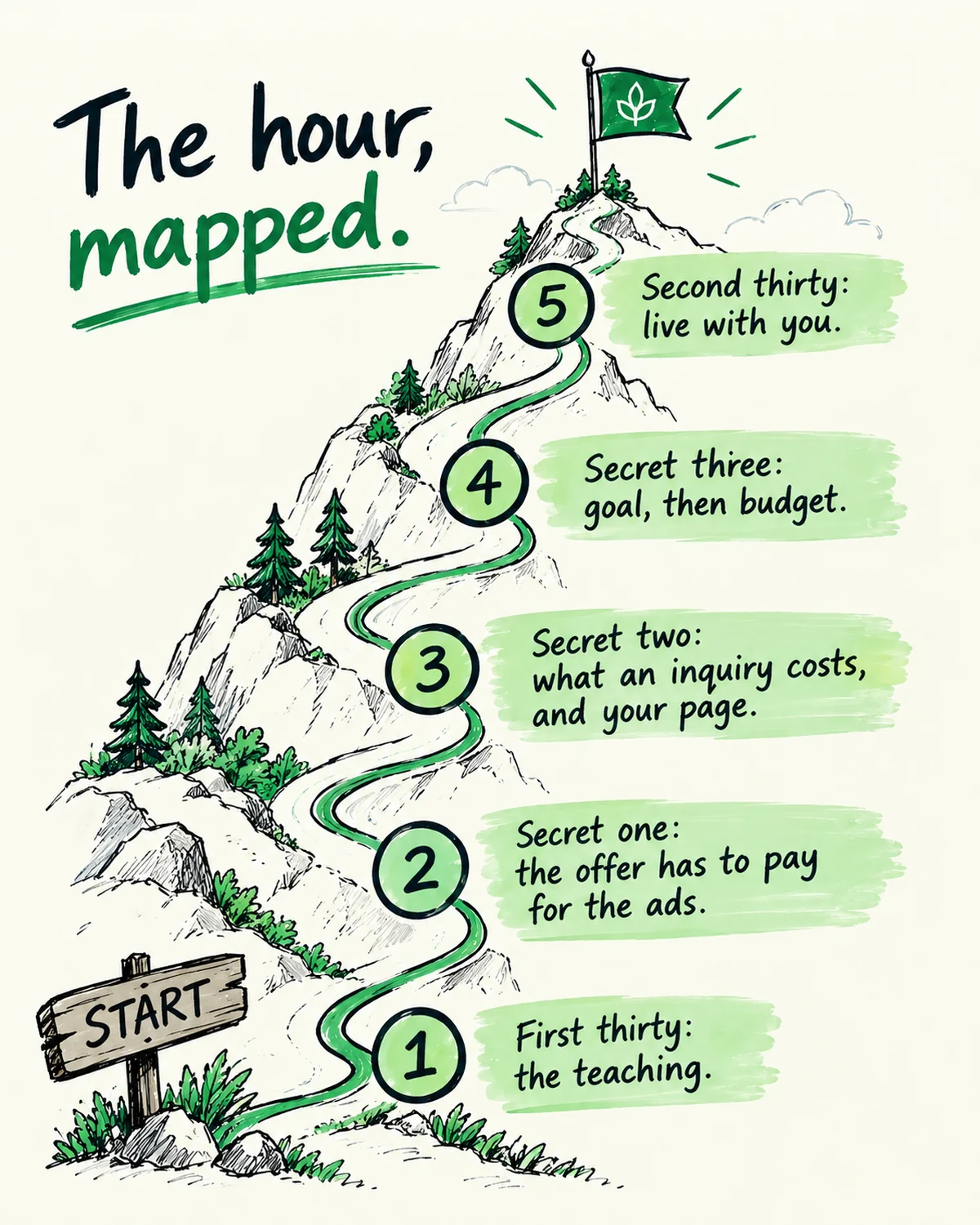
Thirty minutes on, thirty minutes with you
The first half is the teaching: three secrets, each one landing on numbers from a real practice. The second half is live: your questions answered in the room, and a demonstration where we take a practice through the whole method on screen.
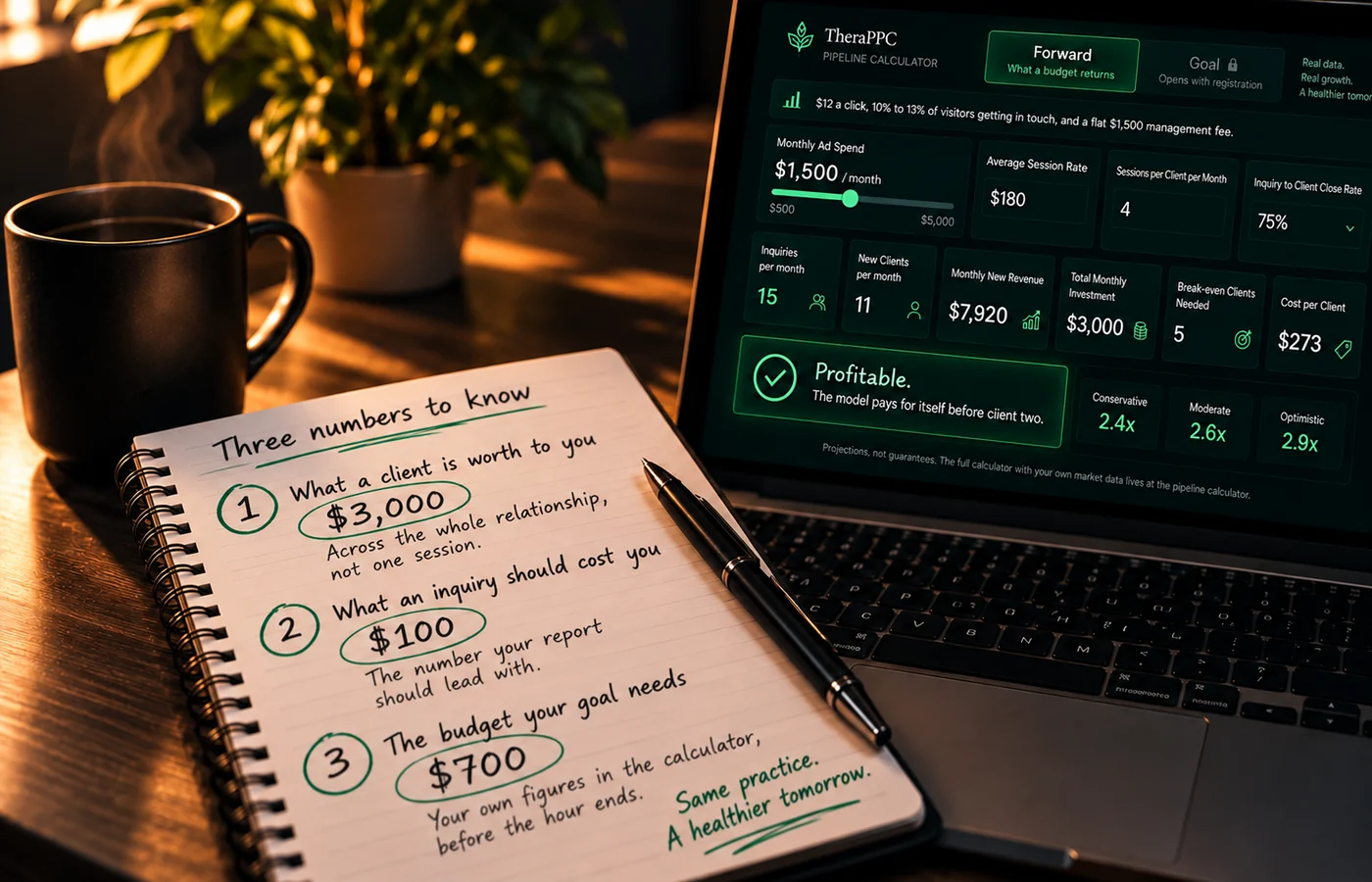
Three numbers, and the arithmetic behind each one
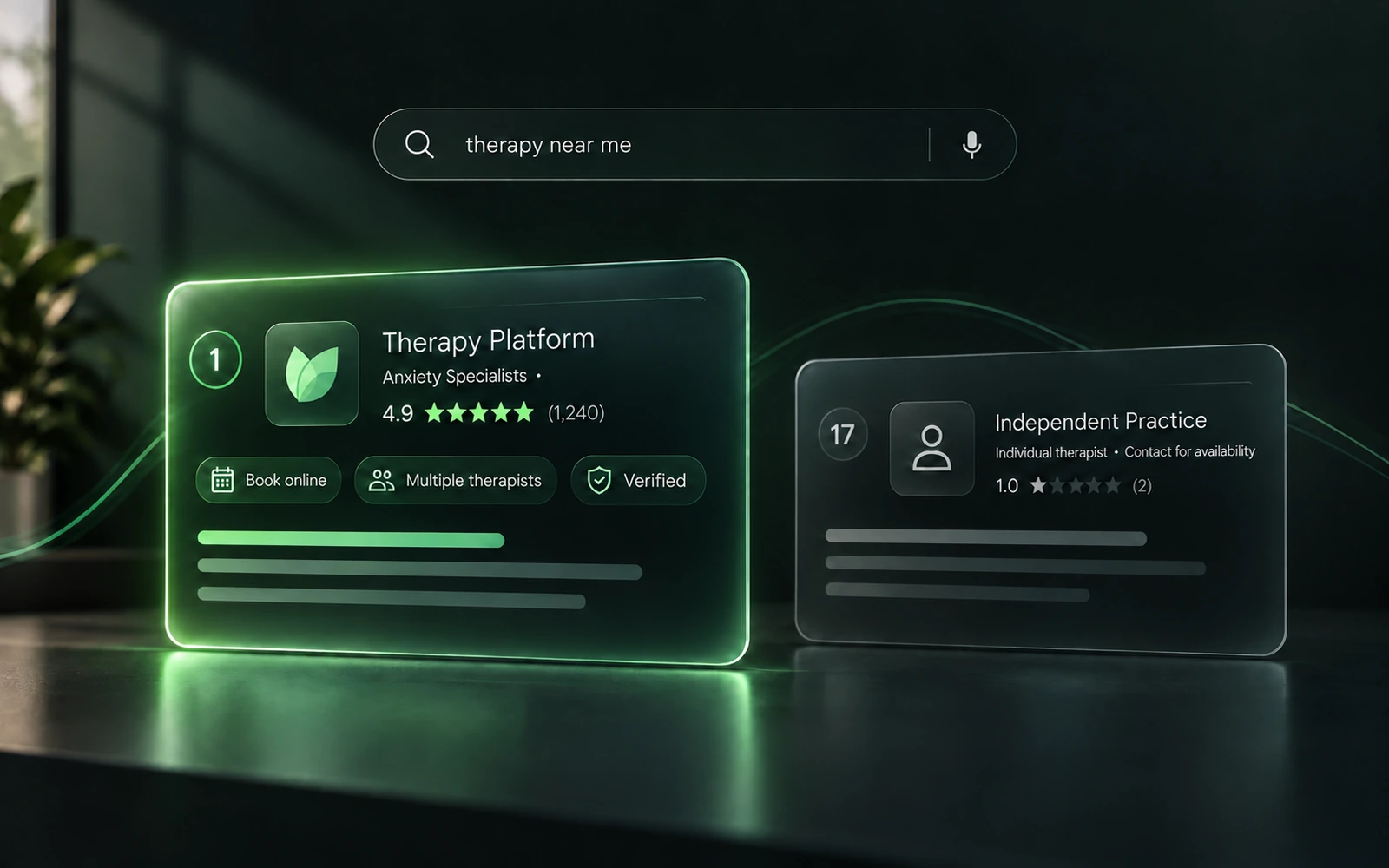
The Psychology Today era is ending for independent practices
A $29.95 profile used to be the whole marketing plan. Venture funded platforms now flood that same directory with managed listings, and independent practices get buried under them.
The directory is now a marketplace
Grow Therapy, Rula, Alma and Headway sell shelf space to platforms that can outbid a solo practice for the same listing. Your profile did not get worse. The room got louder.
Most practices that tried ads burned budget
General digital agencies do not know who therapy clients are or how they decide, they do not know the rules you work under, and they do not know how to measure an inquiry without touching something a client said in confidence. Then the ads get blamed for the setup.
Search is the moment of decision
Someone typing "therapist near me" is already looking for help. You are not interrupting. You are answering, and that is a different game with different numbers.
What sixty minutes actually changes
By the end you will know whether paid search can pay for itself in your practice, what one inquiry should cost you, which parts of your page are losing people, and the exact budget your next client target needs.
Nobody leaves with a recording. You leave with the numbers written down for your own practice.
Three secrets, and the tool that proves each one
Each secret kills one reason practices lose money on ads. Each one ends with a number you can check for your own practice.
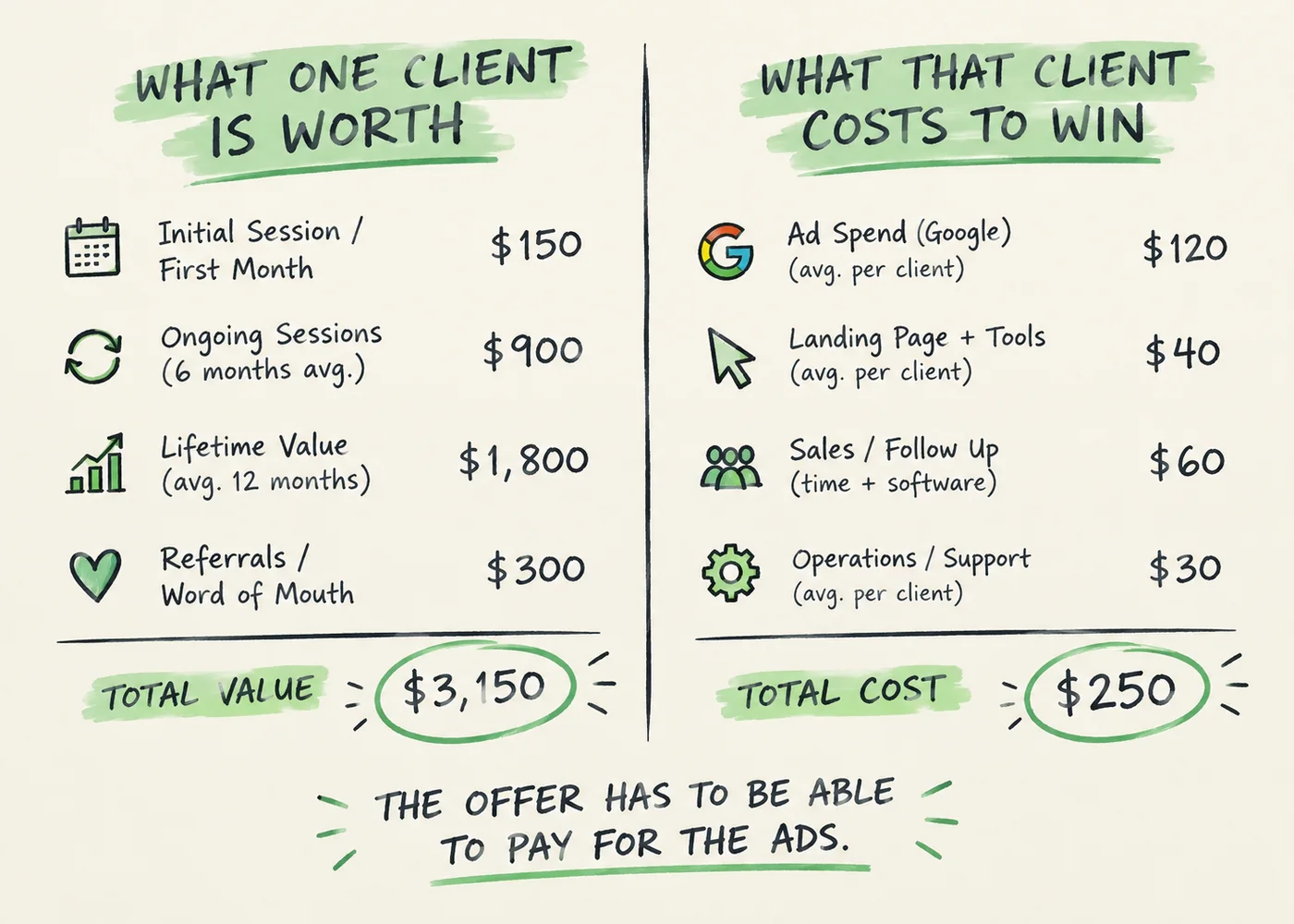
The offer has to be able to pay for the ads
Some offers are perfectly good services that can never be profitable to advertise. You will see how to price and package yours so one client covers what it costs to win one.
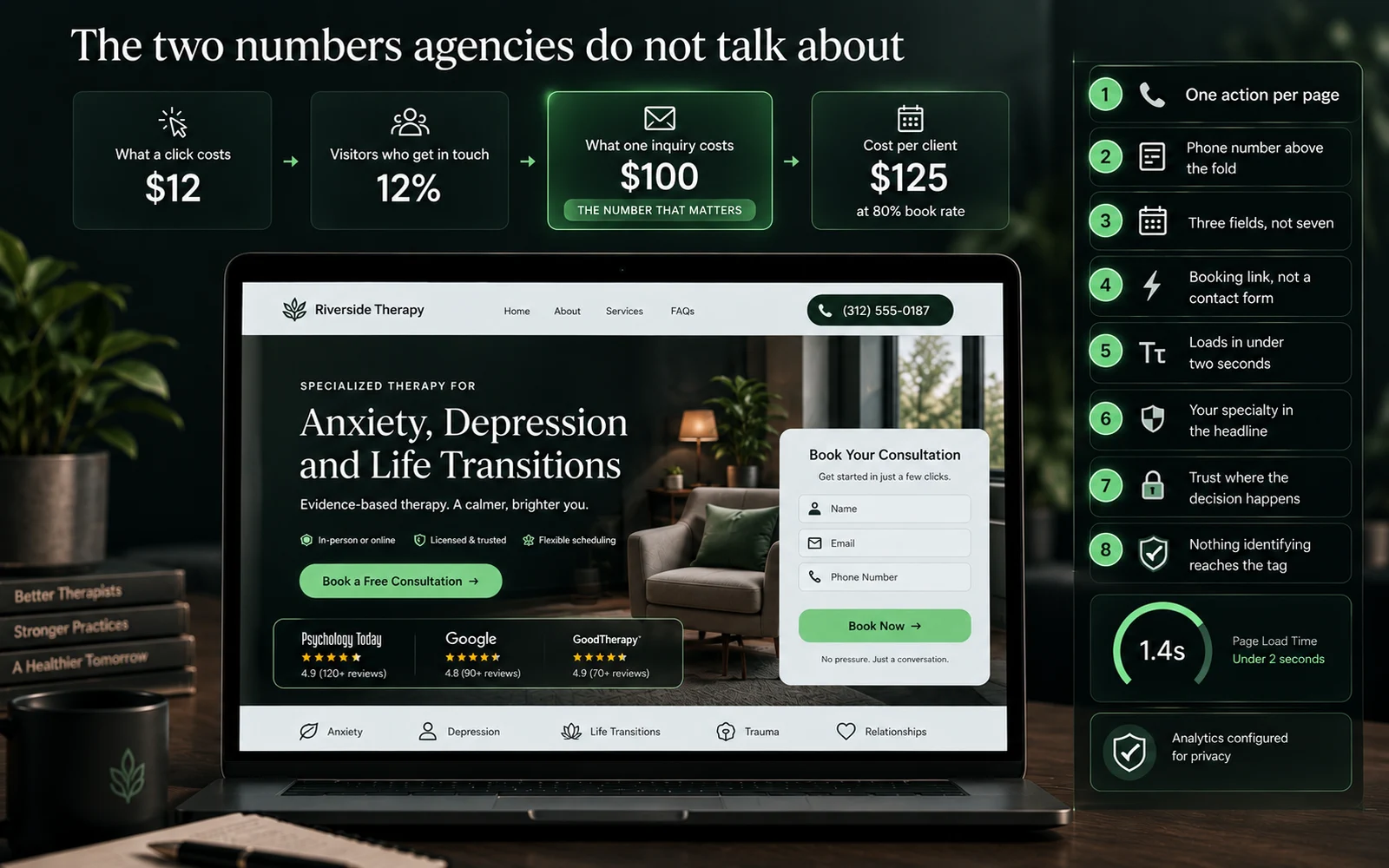
The two numbers agencies do not talk about
What an inquiry costs you, and how many of the people who visit your page get in touch. Eight things that move both, in the order to fix them, including the one change that usually doubles booking rates.
Hit the goal without overspending
The budget is an output, not an input. You will set a client target, work backwards to the spend it needs, and set the guardrails that keep it there.
The offer has to be able to pay for the ads
Ads rarely fail because the ads are bad. They fail because the thing being sold cannot pay what a client costs to win. Two numbers decide it before you spend anything.
The two numbers agencies do not talk about
The ads decide who clicks. The page decides who books. What an inquiry costs is what a click costs divided by how many visitors get in touch, and the page moves that number further than anything you change in the ad account.
At $12 a click: 3% gives a $400 inquiry. 13% gives a $92 inquiry. Same ad, same budget, four times the inquiries.
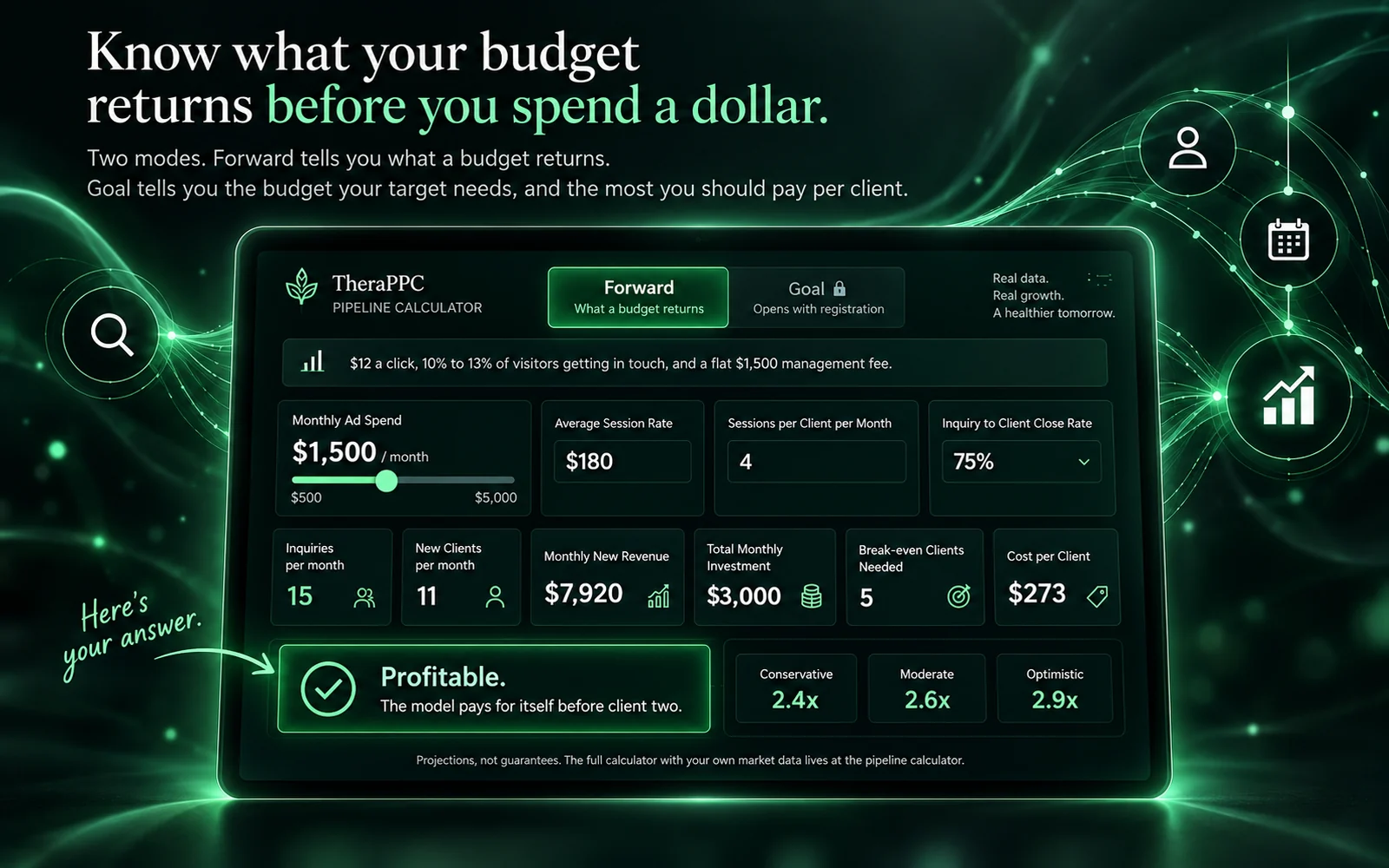
Know what your budget returns before you spend a dollar
Two modes. Forward tells you what a budget returns. Goal tells you the budget your target needs, and the most you should pay per client.
Projections, not guarantees. The full calculator with your own market data lives at the pipeline calculator.
Set the goal first, then the budget
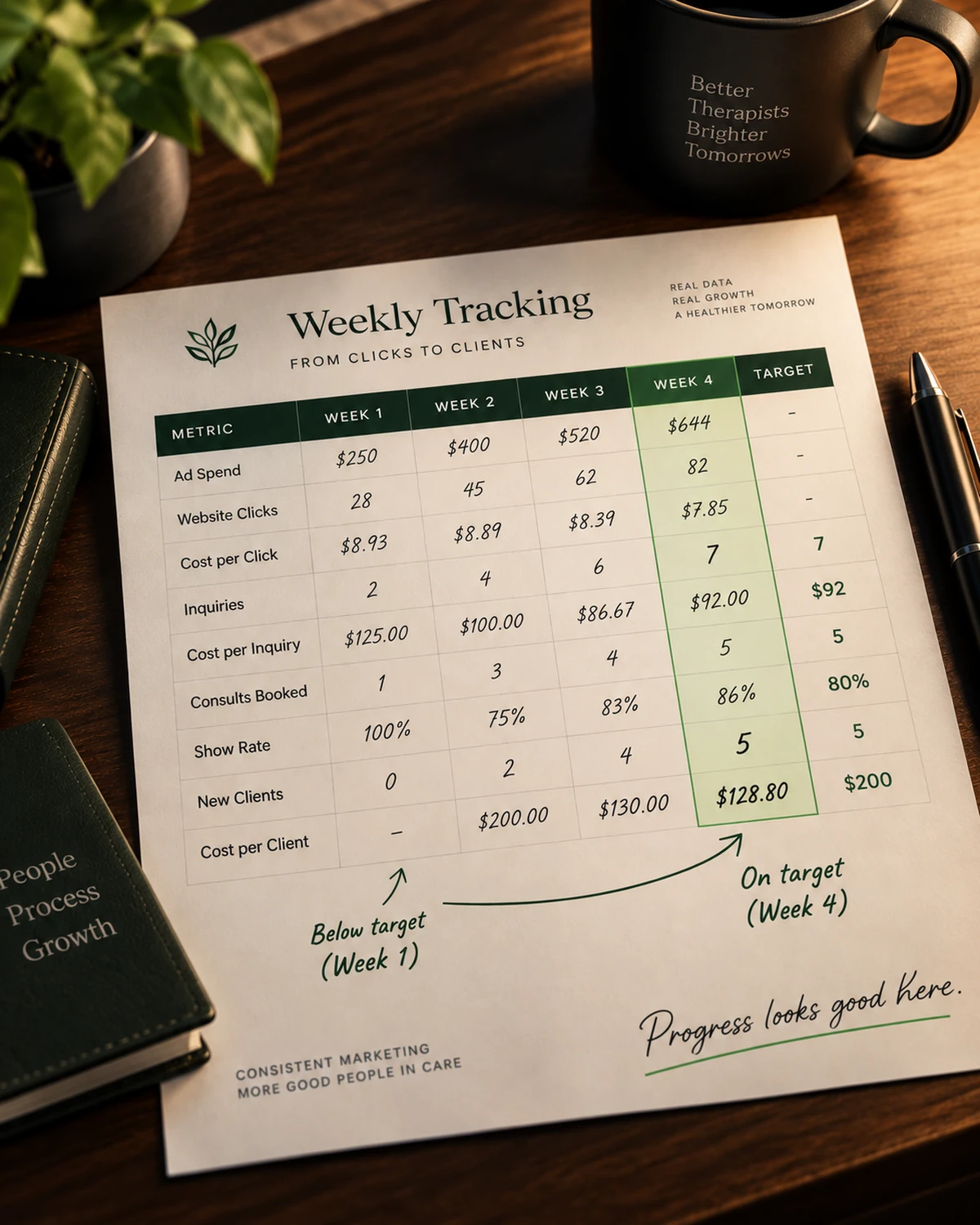
You do not set a budget and hope. You set a client target, work backwards to the inquiries and the spend it needs, then hold the line every week.
The practices behind the numbers
Every practice below came to us with the same complaint. Each one ends on a figure you can check against your own, and each one changed how we run accounts since.
Published from accounts we run today
Every figure in this session is one we already publish, or one your own calculator returns. Nothing is a case study from a decade ago.
$37 cost per inquiry
Ontario group practice, $3,400 in spend, 91 inquiries in 30 days.
13% of visitors get in touch
Against an industry average of 3% to 5% for therapy sites.
80% of inquiries booked
Because someone answered the phone and offered a time.
21 days back in market
Psychiatric practice rebuilt after a compliance shut down, zero flags.
What members say after they apply it
The founding group is new, so there are no member quotes here yet. They go up only with written permission, and they land here as they come in. If you want a reference before you decide, ask on the call and we will find someone you can speak to.
No invented testimonials, ever. The same rule as the stories above: real practices, real numbers, written permission.
Three ways to work with us, one ladder
Start where you are. Every path keeps your accounts in your name, and moving up the ladder later does not waste what you already paid for. If you are not sure which rung fits your practice, ask us in the session and we will tell you the one we would pick, and the one we would leave alone.
Run it yourself
- Every workshop and recording on therapy ads, and any course you ask for, we build it
- The room where you post a question and get an answer
- Desktop and mobile app, so it works from the office or between clients
- The templates and the code library
- Office hours twice a week, Tuesday and Friday
- The one on one strategy call, on the annual plan
Run it with us: StackPack VIP
- Everything in StackPack
- The Discord, with experts in it and our AI agent working beside you: it coaches you through any topic and does the work with you
- Work with other members on whatever you are stuck on, and find the person who already solved it
- At least one one to one call every month, more if you ask
- Desktop and mobile app
- Where the real work happens once the learning is done and you want guidance while you act
We run it for you
- Our team implements the three secrets and dozens of our other written procedures inside your system
- Campaign build, compliant tracking, and the page work
- Everything we use is open to you: the numbers, the templates, our AI agents
- Weekly reporting and a monthly strategy call
- Quoted from your goals, not from a menu
What the room is worth if you bought the pieces
Everything below is something members get. Priced the way we would price it bought on its own.
One session of therapy is $180.
A year of the room is $270 on the day. Do that math too.
Your questions, and a live demonstration
The teaching stops at the half hour. What follows is done on the call, on screen, with volunteer practices from the room.
A practice priced out loud
We take one volunteer practice and work out what a client is worth across the relationship, then what an inquiry can cost and still leave a profit. Their numbers, not an example.
A page worked through
A volunteer sends their page. We walk the eight fixes in order and name what changes first and what it is worth, on the screen, while everyone watches.
Open questions
Anything from the hour, and anything about your own practice. If your market is too small or your specialty too narrow, we will say so in front of everyone.
Two numbers if you have them: what you charge a session, and roughly how many sessions a client stays for. With those we can run your whole practice live.
The calculator open on screen, goal mode and forward mode, the verdict line for each practice, and the eight fixes applied to a real page. No slides, no theory.
What people ask before they register
Ten questions, each answered on its own, so you can stop reading at any point and still know whether this suits your practice.
How much do I need to spend on ads?
I already tried ads and burned budget. Why would this be different?
Will this work in my city and my specialty?
What if my offer is too small to pay for ads?
Do I need to be technical?
Do I have time for this with a caseload?
Is this therapy specific, or general marketing?
What if I would rather hand it over?
What if it does not work for me?
Am I locked into anything?
Who this is for, and who it is not
We would rather you skip it than sit through something that does not apply to you.
You have a practice and a goal
You are earlier than this
An agreement, because the three secrets are a competitive advantage
What you get in this session is the same set of decisions we make inside paid engagements. Handed to a room of local competitors, it stops being an advantage.
So attendance is conditional. One page, plain English, agreed at registration, and it is the reason the room stays small enough to be useful.
Attendee agreement, in short
The full text is shown on the registration screen before you pay or register. The shape of it:
- You will not record, stream, photograph or republish the session.
- You will not post the benchmarks, frameworks or scripts publicly.
- You may use everything in your own practice, without limit.
- You may share the ideas with your own team.
- Breaking it ends your access, without a refund conversation.
We also ask two questions at registration. They are there so the room is people who will use this, not people collecting information.
Save your seat
Sixty minutes, Thursday 22 October at 4:00 p.m. Eastern. You leave with your own budget number, the three secrets, and the calculator open on your practice. Signing the agreement is what gets you in the room.
Thursday 22 October, 4:00 p.m. Eastern, live. Sixty minutes. Bring a pen, because the numbers land on your page, not in a workbook.